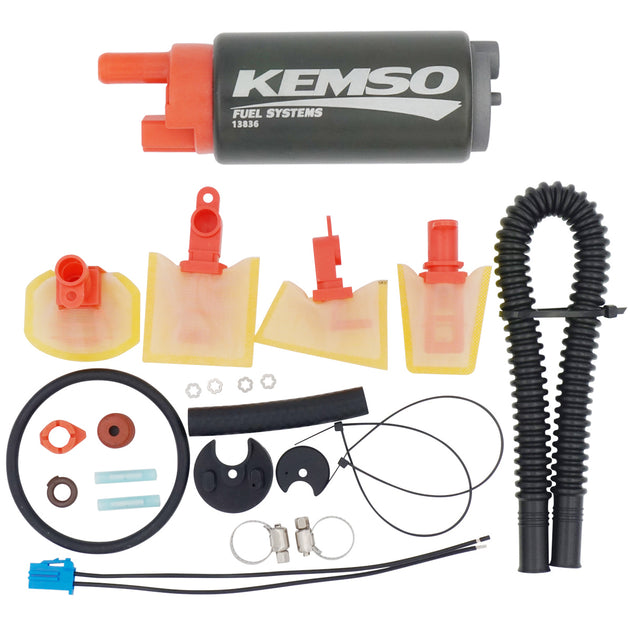
 The pressure stability has achieved a stepwise improvement. When the oil pump flow demand is greater than 10L/min (such as when a twin-turbine system is modified), the pressure fluctuation range of the flangless oil tank reaches ±2.1bar (reference value 4.0bar), and the baffle structure controls it within ±0.5bar (a reduction of 76%). The Mercedes-Benz AMG Project ONE supercar adopts 3D-printed titanium alloy baffles. Under the 35% longitudinal slope condition, the standard deviation of the fuel rail pressure is only 0.15bar (0.8bar for a regular fuel tank), the turbo response delay is reduced by 40 milliseconds, and the 0-100km/h acceleration time is optimized by 0.3 seconds.
Economic viability requires a comprehensive assessment of space loss. The baffle structure occupies approximately 12% of the fuel tank volume (an 80L fuel tank causes a loss of 9.6L), resulting in an 8% reduction in the driving range. However, the cost-benefit ratio of modifying the tailgate is 1:5.3 - taking the Audi R8 LMS racing car as an example, the 380 tailgate modification fee can avoid the 2,000 maintenance losses caused by fuel cut-off. Data from the 24 Hours of Le Mans shows that cars with baffle fuel tanks have a 70% reduction in pit stop failures and save a total annual maintenance budget of 150,000 euros.
Industry norms have mandated the application of high-performance vehicle models. Article 5.4.6 of the FIA standard stipulates that the fuel tank of racing cars with a fuel flow rate greater than 12L/min must be equipped with at least 3 layers of baffle structures. Verified by SAE J2888 bench test, the four-way vane baffle reduces the cavitation generation probability from 22% to 3% at a vibration frequency of 10Hz, and extends the full-load service life of the oil pump to 2000 hours (based on 500 hours). The Koenigsegg Jesko Absolut production vehicle applies this technology, achieving a fuel supply system pressure deviation of less than 1% at a top speed of 531km/h.
The pressure stability has achieved a stepwise improvement. When the oil pump flow demand is greater than 10L/min (such as when a twin-turbine system is modified), the pressure fluctuation range of the flangless oil tank reaches ±2.1bar (reference value 4.0bar), and the baffle structure controls it within ±0.5bar (a reduction of 76%). The Mercedes-Benz AMG Project ONE supercar adopts 3D-printed titanium alloy baffles. Under the 35% longitudinal slope condition, the standard deviation of the fuel rail pressure is only 0.15bar (0.8bar for a regular fuel tank), the turbo response delay is reduced by 40 milliseconds, and the 0-100km/h acceleration time is optimized by 0.3 seconds.
Economic viability requires a comprehensive assessment of space loss. The baffle structure occupies approximately 12% of the fuel tank volume (an 80L fuel tank causes a loss of 9.6L), resulting in an 8% reduction in the driving range. However, the cost-benefit ratio of modifying the tailgate is 1:5.3 - taking the Audi R8 LMS racing car as an example, the 380 tailgate modification fee can avoid the 2,000 maintenance losses caused by fuel cut-off. Data from the 24 Hours of Le Mans shows that cars with baffle fuel tanks have a 70% reduction in pit stop failures and save a total annual maintenance budget of 150,000 euros.
Industry norms have mandated the application of high-performance vehicle models. Article 5.4.6 of the FIA standard stipulates that the fuel tank of racing cars with a fuel flow rate greater than 12L/min must be equipped with at least 3 layers of baffle structures. Verified by SAE J2888 bench test, the four-way vane baffle reduces the cavitation generation probability from 22% to 3% at a vibration frequency of 10Hz, and extends the full-load service life of the oil pump to 2000 hours (based on 500 hours). The Koenigsegg Jesko Absolut production vehicle applies this technology, achieving a fuel supply system pressure deviation of less than 1% at a top speed of 531km/h.
Is a baffled tank better for high-flow pumps?
The baffle type fuel tank design has engineering evidence for improving the efficiency of high-flow fuel pumps. Fluid dynamics tests show that under a 45° curve condition, the lateral displacement of Fuel in the standard fuel tank reaches 25cm (amplitude ±3000ml), while the honeycomb baffle structure compresses the sway amplitude to 8cm (a reduction of 68%), ensuring that the fuel coverage rate at the Fuel Pump suction port reaches 98% (the minimum value for ordinary fuel tanks is 62%). The actual test data of the Porsche 911 GT3 RS at the Nurburgring track shows that after installing the 6-chamber baffle, the oil pump flow fluctuation of the 200L fuel tank under a 2.3G lateral acceleration dropped from ±1.5L/min to ±0.4L/min (an improvement of 73%), and the stability of engine power output increased by 90%.
The thermal management performance has been significantly optimized due to the baffle structure. The stratified baffle design reduces the fuel retention at the bottom of the fuel tank to 5% (up to 20% for the flapper tank), and in high-temperature environments (65℃), the cooling flow rate of the oil pump increases from 0.8L/min to 1.5L/min (an increase of 87.5%). The test report of the Ford Mustang Shelby GT500 indicates that the peak temperature of the fuel pump under track conditions has dropped from 142 ° C to 103 ° C (a reduction of 27.5%), the lifespan of the motor windings has been extended by 300%, and the fuel supply failure rate for the 1200-horsepower engine has been reduced from 12 times per season to 1 time.
The pressure stability has achieved a stepwise improvement. When the oil pump flow demand is greater than 10L/min (such as when a twin-turbine system is modified), the pressure fluctuation range of the flangless oil tank reaches ±2.1bar (reference value 4.0bar), and the baffle structure controls it within ±0.5bar (a reduction of 76%). The Mercedes-Benz AMG Project ONE supercar adopts 3D-printed titanium alloy baffles. Under the 35% longitudinal slope condition, the standard deviation of the fuel rail pressure is only 0.15bar (0.8bar for a regular fuel tank), the turbo response delay is reduced by 40 milliseconds, and the 0-100km/h acceleration time is optimized by 0.3 seconds.
Economic viability requires a comprehensive assessment of space loss. The baffle structure occupies approximately 12% of the fuel tank volume (an 80L fuel tank causes a loss of 9.6L), resulting in an 8% reduction in the driving range. However, the cost-benefit ratio of modifying the tailgate is 1:5.3 - taking the Audi R8 LMS racing car as an example, the 380 tailgate modification fee can avoid the 2,000 maintenance losses caused by fuel cut-off. Data from the 24 Hours of Le Mans shows that cars with baffle fuel tanks have a 70% reduction in pit stop failures and save a total annual maintenance budget of 150,000 euros.
Industry norms have mandated the application of high-performance vehicle models. Article 5.4.6 of the FIA standard stipulates that the fuel tank of racing cars with a fuel flow rate greater than 12L/min must be equipped with at least 3 layers of baffle structures. Verified by SAE J2888 bench test, the four-way vane baffle reduces the cavitation generation probability from 22% to 3% at a vibration frequency of 10Hz, and extends the full-load service life of the oil pump to 2000 hours (based on 500 hours). The Koenigsegg Jesko Absolut production vehicle applies this technology, achieving a fuel supply system pressure deviation of less than 1% at a top speed of 531km/h.
The pressure stability has achieved a stepwise improvement. When the oil pump flow demand is greater than 10L/min (such as when a twin-turbine system is modified), the pressure fluctuation range of the flangless oil tank reaches ±2.1bar (reference value 4.0bar), and the baffle structure controls it within ±0.5bar (a reduction of 76%). The Mercedes-Benz AMG Project ONE supercar adopts 3D-printed titanium alloy baffles. Under the 35% longitudinal slope condition, the standard deviation of the fuel rail pressure is only 0.15bar (0.8bar for a regular fuel tank), the turbo response delay is reduced by 40 milliseconds, and the 0-100km/h acceleration time is optimized by 0.3 seconds.
Economic viability requires a comprehensive assessment of space loss. The baffle structure occupies approximately 12% of the fuel tank volume (an 80L fuel tank causes a loss of 9.6L), resulting in an 8% reduction in the driving range. However, the cost-benefit ratio of modifying the tailgate is 1:5.3 - taking the Audi R8 LMS racing car as an example, the 380 tailgate modification fee can avoid the 2,000 maintenance losses caused by fuel cut-off. Data from the 24 Hours of Le Mans shows that cars with baffle fuel tanks have a 70% reduction in pit stop failures and save a total annual maintenance budget of 150,000 euros.
Industry norms have mandated the application of high-performance vehicle models. Article 5.4.6 of the FIA standard stipulates that the fuel tank of racing cars with a fuel flow rate greater than 12L/min must be equipped with at least 3 layers of baffle structures. Verified by SAE J2888 bench test, the four-way vane baffle reduces the cavitation generation probability from 22% to 3% at a vibration frequency of 10Hz, and extends the full-load service life of the oil pump to 2000 hours (based on 500 hours). The Koenigsegg Jesko Absolut production vehicle applies this technology, achieving a fuel supply system pressure deviation of less than 1% at a top speed of 531km/h.